Impact Area
Public Sector
Location
Ministry of Health
Driven by sobering health data in Aotearoa, New Zealand, showing high rates of smoking among young Māori women, The Ministry of Health needed to develop targeted smoking cessation initiatives. We worked together to best establish what this change of approach might look like – through research to better understand the issue and experiences of young Māori women, then through phases of prototyping and testing.

The Context
In 2016, the NZ Health Survey showed that self-reported daily smoking for Māori women aged between 18 and 24 was 42.7% compared with 8.6% of non-Māori women of the same age. The Ministry of Health was concerned about these statistics, motivating them to partner with ThinkPlace to conduct research on why young Māori women smoke, and co-design and test smoking cessation initiatives with providers and partners to develop effective and targeted solutions.
The project
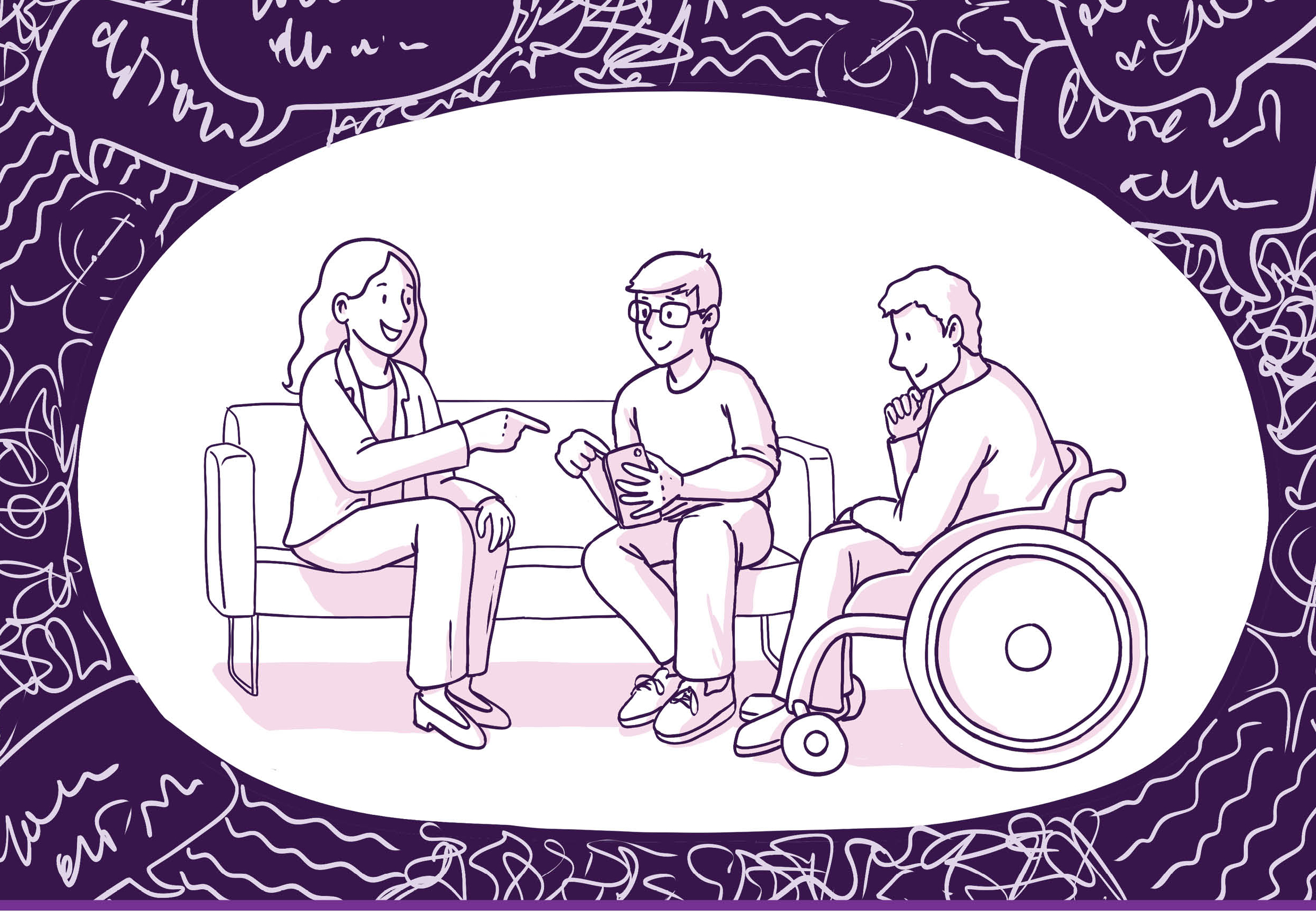
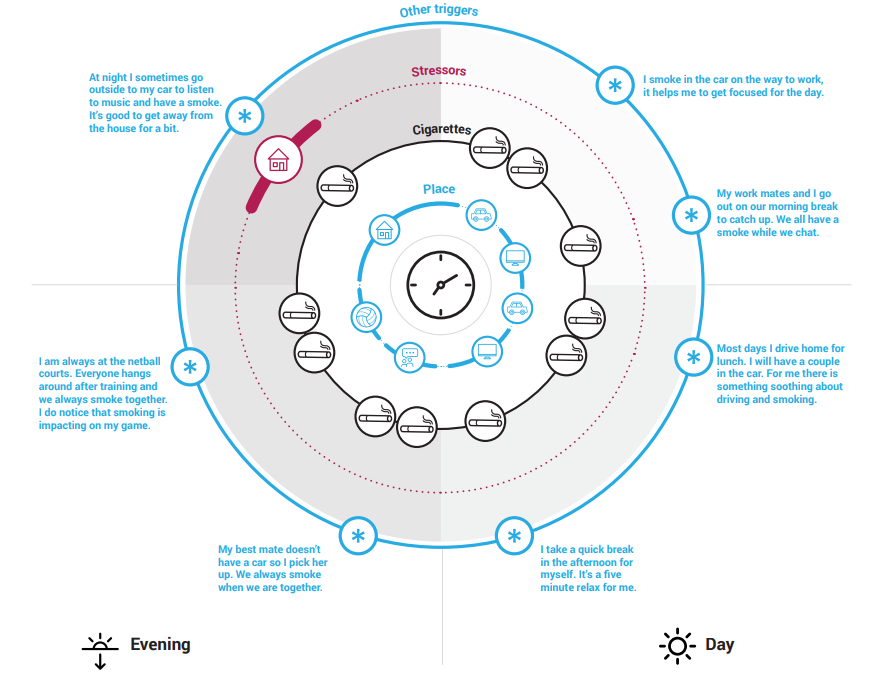
We engaged with five community agencies in the Wellington region and spoke with 37 young wāhine at community sites, workplaces, and in homes. The interviews were an opportunity for wāhine to share their stories in an open, judgement-free environment. From these interviews, and with input from the wāhine themselves, we developed themes, personas and designed a journey map that illustrated the experience of smoking. Key themes highlighted the importance of young Māori women’s social environment and relationships, the complex inner conflict that can accompany starting and stopping smoking, and the need for a whānau-centric, holistic wellbeing approach to smoking cessation.
Led by the experiences of these wāhine, we collaborated with the Ministry and local community organisations to generate 54 ideas for initiatives and approaches that disrupt the standard approach to smoking cessation. These ideas were then prototyped and trialled by quit smoking service providers across New Zealand in a ‘learn by doing’ phase. This helped to identify elements that are critical to the success of young Māori women’s smoking cessation.
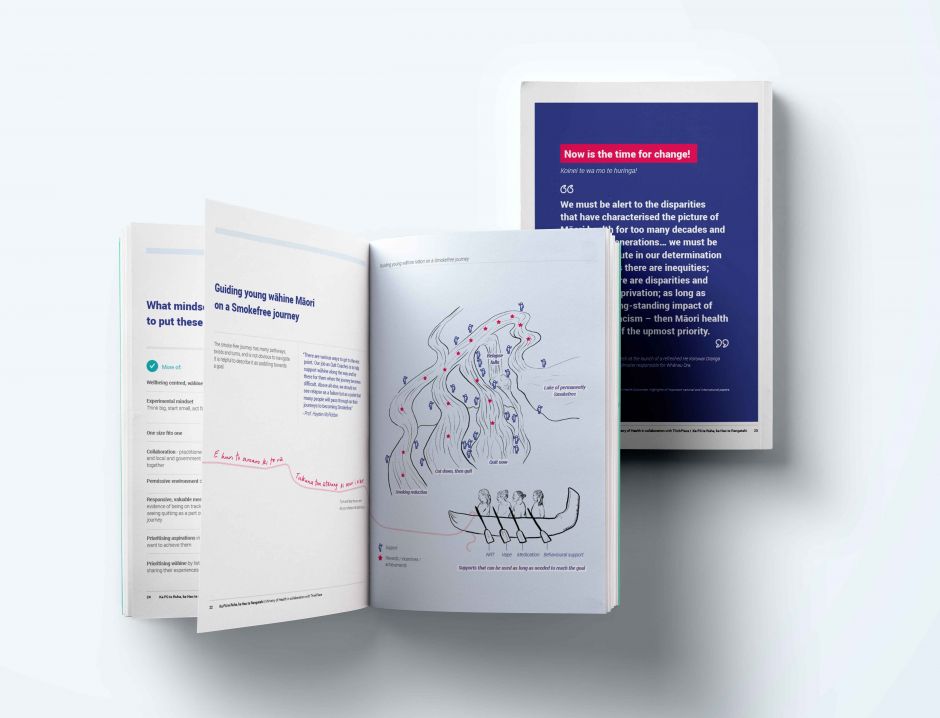
After further testing with a range of experts, providers and Kaupapa Māori evaluators, we worked together to form principles and guidelines for practitioners working with and within communities on smoking cessation. Drawing on insights from the research and learnings from prototyping and testing initiatives, we outlined core values and principles, such as the importance of service experiences being co-designed or wāhine-led, and incorporating the wider context, relationships and lived realities of young Māori women.
The impact
Together with young wāhine Māori who smoked, a range of community agencies and health providers, and Kaupapa Māori experts, we were able to co-design principles and guidelines that can inform local providers across Aotearoa how to best work with young wāhine Māori on smoking cessation.
John Whaanga, Deputy Director-General, Māori Health, rightly said that solving health inequities requires new ways of working, challenging our own pre-conceptions and doing a whole lot of small things to make it better. The Young Māori Women’s Smoking Cessation project did just that – tackled a health equity challenge with some refreshed thinking, determination, optimism and an experimental mindset that involved a “learn as we go” design approach.
“In 2015/16 Māori women’s daily smoking rate was 36.6%, and in 2021/22 the daily rate was 18.2% – so we’ve halved the daily smoking rate in less than a decade. Between 2019/20 and 2021/22 there was an 8.2% drop and for the first time in a long, long time Māori women’s daily smoking rates are lower than Māori men’s daily smoking rates… It’s a pretty amazing turnaround and largely due to the work the Ministry of Health and ThinkPlace started.”
-Ministry of Health staffer
Case studies
View all case studies
A roadmap to Youth Employment
Read case study
A new integrated model of care for mental health
Read case study